


If you don't know or just arn't sure. Well, then let your curiosity take to the land of wonderful Sparksville. First off, before we begin
just remember that there's an unlimited way to make your energy.
Believe me when Shock Monkey says, truly, truly the many way of making electrons run is only limited by our lack of imagination. So with that, let's go and see what's just beyond the coming distant horizon.
Angular Momentum and Torque.

The amount of "angular momentum" of an object with respect to a fixed point S is proportional to the object's "MOMENT of INERTIA," and to the "angular velocity" relative to the fixed point.
Multiplying those three factors gives the angular momentum. In notation: Where L is the sign for "angular momentum," I is the "moment of inertia," r is the distance to the fixed point S, and ? is the "angular velocity."
Click here to learn more about angular momentum on WIKIPEDIA.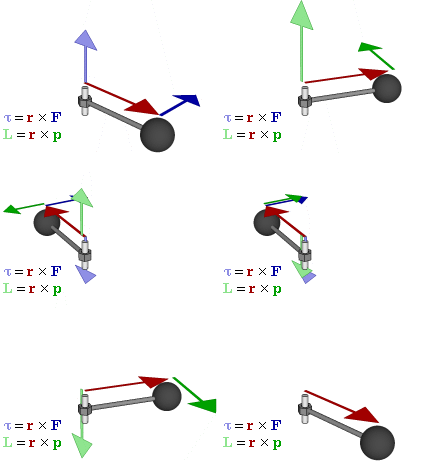
No pun intended, but loosely speaking, "TORQUE*" is a measure of the turning force on an object such as a bolt or a flywheel. For example, pushing or pulling the handle of a wrench connected to a nut or bolt produces a torque (turning force) that loosens or tightens the nut or bolt.
Click here to learn more about torque on Wikipedia.
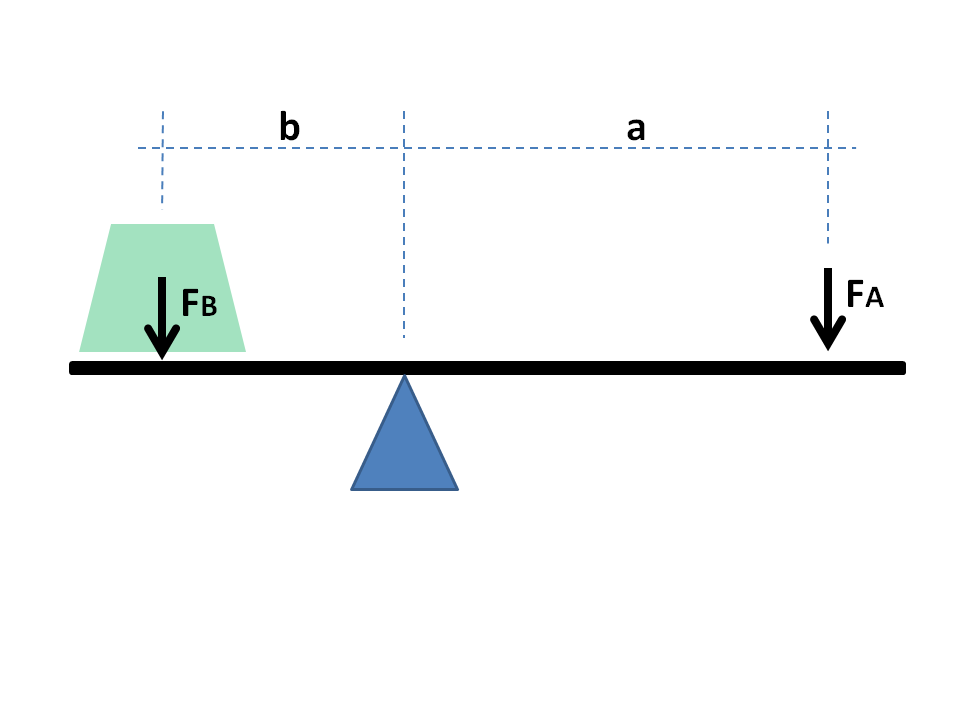
*A practical way to calculate the magnitude of the torque is to first determine the lever arm and then multiply it times the applied force. The lever arm is the perpendicular distance from the axis of rotation to the line of action of the force
To see for yourself, click here for the torque calculator on this hyperphysics' webpage.
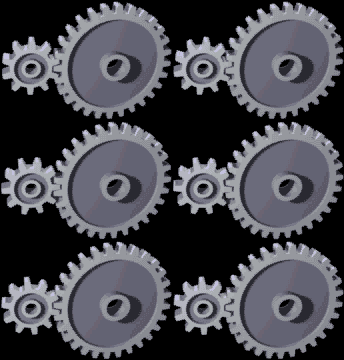
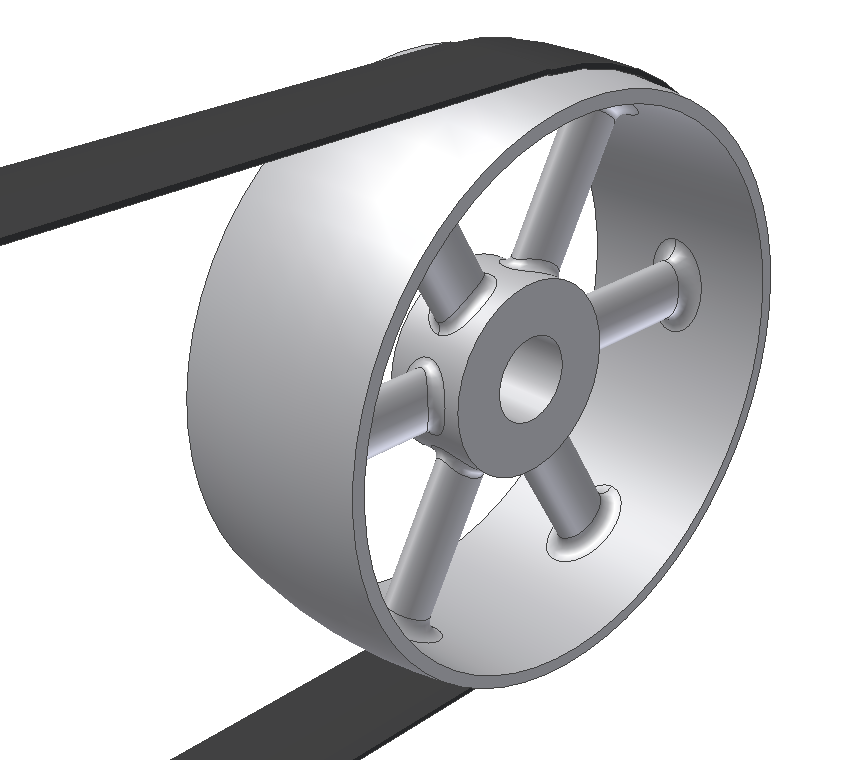
Pulleys and Gear Ratios.
Alternators & Regulators.
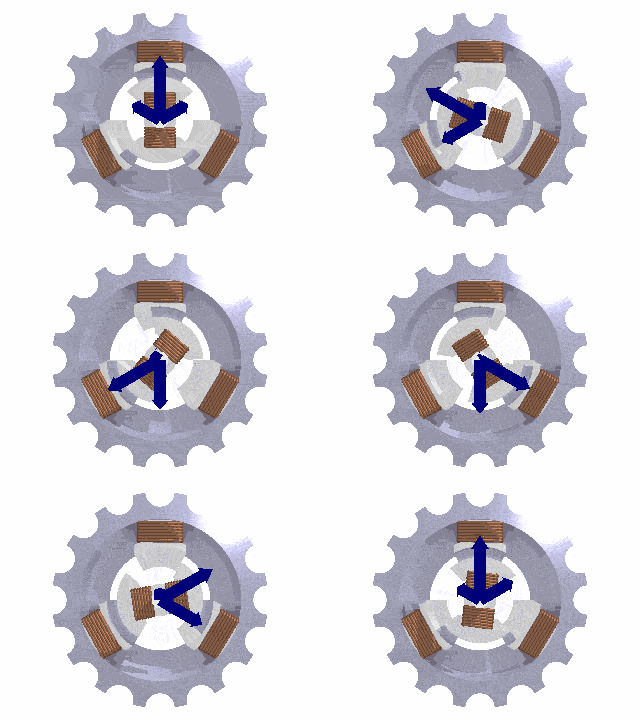 An alternator is an electromechanical device that converts mechanical energy
to electrical energy in the form of alternating current.
Most alternators use a rotating magnetic field with a stationary armature but occasionally, a rotating armature is used with a stationary magnetic field; or a linear alternator is used.
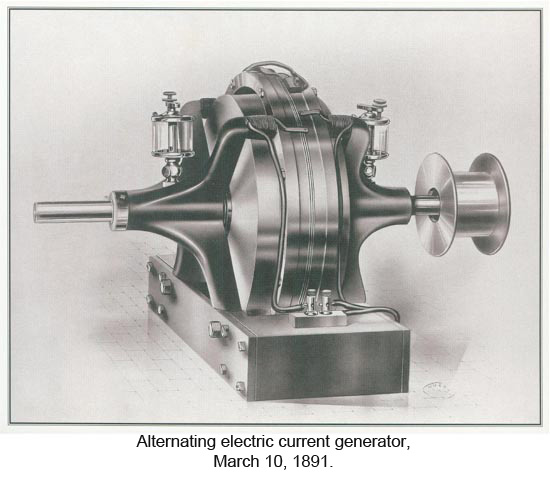
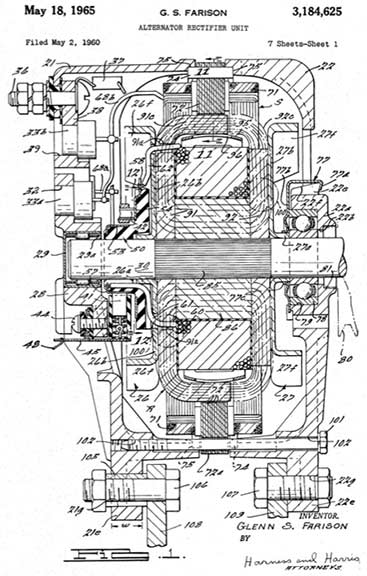
In principle, any AC electrical generator can be called an alternator, but usually the term refers to small rotating machines driven by automotive and other internal combustion engines.
An alternator that uses a permanent magnet for its magnetic field is called a magneto. Alternators in power stations driven by steam turbines are called turbo-alternators.
An alternator is an electromechanical device that converts mechanical energy
to electrical energy in the form of alternating current.
Most alternators use a rotating magnetic field with a stationary armature but occasionally, a rotating armature is used with a stationary magnetic field; or a linear alternator is used.
In principle, any AC electrical generator can be called an alternator, but usually the term refers to small rotating machines driven by automotive and other internal combustion engines.
An alternator that uses a permanent magnet for its magnetic field is called a magneto. Alternators in power stations driven by steam turbines are called turbo-alternators.
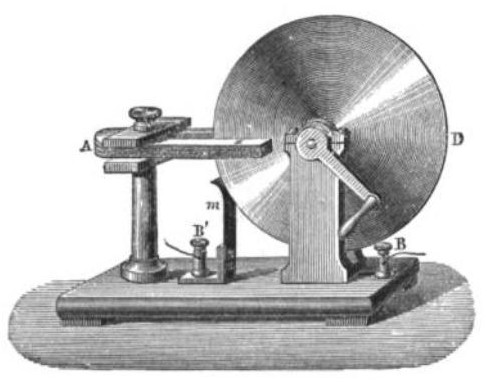 Drawing of Faraday disk, the first electromagnetic generator,
invented by British scientist Michael Faraday in 1831.
The copper disk rotated between the poles of a horseshoe shaped magnet and this rotational motion induced a radial flow of current in the disk, from the axle toward the edge.
Drawing of Faraday disk, the first electromagnetic generator,
invented by British scientist Michael Faraday in 1831.
The copper disk rotated between the poles of a horseshoe shaped magnet and this rotational motion induced a radial flow of current in the disk, from the axle toward the edge.
Nylon and Carbon Fibers.
Nylon is a thermoplastic, silky material, first used commercially in a nylon-bristled toothbrush (1938), followed more famously by women's stockings ("nylons"; 1940). Nylon was intended to be a synthetic replacement for silk and substituted for it in many different products after silk became scarce during World War II. It replaced silk in military applications such as parachutes and flak vests, and was used in many types of vehicle tires. Nylon fibers are used in many applications, including clothes fabrics, bridal veils, package paper, carpets, musical strings, pipes, and rope etc. Nylon is used for mechanical parts such as machine screws, gears and other low- to medium-stress components previously cast in metal. Engineering-grade nylon is processed by extrusion, casting, and injection molding. And of course, solid nylon is used in hair combs.
Carbon fiber is most notably used to reinforce composite materials, particularly the class of materials known as carbon fiber or graphite reinforced polymers. One of its important uses is to significantly improve the fire resistance properties of polymers by molding a thin layer of carbon fibers to the thermoset composites because a dense, compact layer of carbon fibers efficiently reflects heat.
Metal Forming Technologies.
Metal Forming Techniques:
Sheet metal forming: This includes deep and stretch drawing of carbody parts and general purpose flat shaped parts, bending, superplastic forming of sheets and tubes.
There's also hydro-/heatforming of sheets, tubes and profiles made of steel, aluminium and magnesium alloys.
Bulk metal forming: This includes hot and cold extrusion, forging applications, upsetting and lateral extrusion, multiaxis process development for bulk metal forming; ultrasonic assisted wire and tube drawing, piezo applications; semi-solid forming of lightweight alloys and high melting biocompatible materials.
Hardware and Software.
Before the development of the general-purpose computer, most calculations were done by humans. Mechanical tools to help humans with digital calculations were then called calculating machines or even as they are now, calculators. It was those humans who used the machines who were then called computers.
Aside from written numerals, the first aids to computation were purely mechanical devices which required the operator to set up the initial values of an elementary arithmetic operation, then manipulate the device to obtain the result.
An example, is the slide rule in which numbers are represented as lengths on a logarithmic scale and computation is performed by setting a cursor and aligning sliding scales, thus adding those lengths.
World War II and the space race created fierce demand for smaller and faster, which in turn led to the developemnt of the transitor, silicon chip and integrated circuits. Moore's Law predicted the exitence of highly sophiscated computer hardware capable of calculate billions of data bits and correspondingly the software wizardry that could make the hardware come alive with amazing capabilities.
All of these advancements has created a "Brave New World," and which we are all striving to come to terms with before the next societal upheavel
Spinning Wheels and Cardio-Training.
Regular activity has a number of proven, positive health effects, especially on heart health. Vigorous exercise strengthens the heart as a pump, making it a larger, more efficient muscle. Even moderate activity can boost HDL ('good') cholesterol, aid the circulatory system, and lower blood pressure and blood fats. All these effects translate into reduced risk for heart disease, heart attack, and stroke.
Exercise can also offer other benefits, including strengthened muscles, increased flexibility, and stronger bones, which can help ward off the bone-thinning condition called osteoporosis.
Regular activity also promises mental-health benefits, like relieving stress and anxiety. It can help you sleep better and renew your energy. If exercise could be bottled, it would be a best-selling potion at the local pharmacy.